
Your Restaurant Is Busy—So Why Aren’t You Making Money?

A packed dining room and strong sales don't necessarily mean your restaurant is profitable. Here's where to look when the money doesn't seem to be adding up.
A full dining room can feel like a sign that everything is going well. Orders are coming in, the staff is busy, sales look strong, and maybe you're even having record months. And yet somehow, when you look at the bank account, there still isn't much money left.
This is a situation I see often with restaurant owners, and I experienced versions of it myself when I owned my ice cream shop. Strong sales do not automatically translate into strong profits. A restaurant can be busy every day and still struggle financially if the underlying numbers aren't working.
Usually, the problem comes down to a few things: food costs are too high, labor is too high, overhead is eating away at margins, or the business has cash flow issues that make it feel like it's constantly short on money. The only way to figure out which one is happening is to stop looking only at sales—or your bank balance—and start looking at the numbers behind the business.
Sales Are Only Part of the Story

Restaurant owners naturally pay close attention to sales because it's the number they see every day in the POS system. It's easy to understand, and it's an important number. But sales alone don't tell you whether the restaurant is actually profitable.
If your restaurant does $100,000 in sales this month, that might sound great. But the more important question is what it cost you to generate those sales. How much went toward food, payroll, rent, merchant processing fees, insurance, utilities, repairs, delivery apps, supplies, and all the other costs that come with running a restaurant?
That's why one of the first things I ask when an owner tells me their sales are strong is: Can I see your P&L? Your profit and loss statement tells a much more complete story than your sales report or bank account ever will.
Start With Food Cost
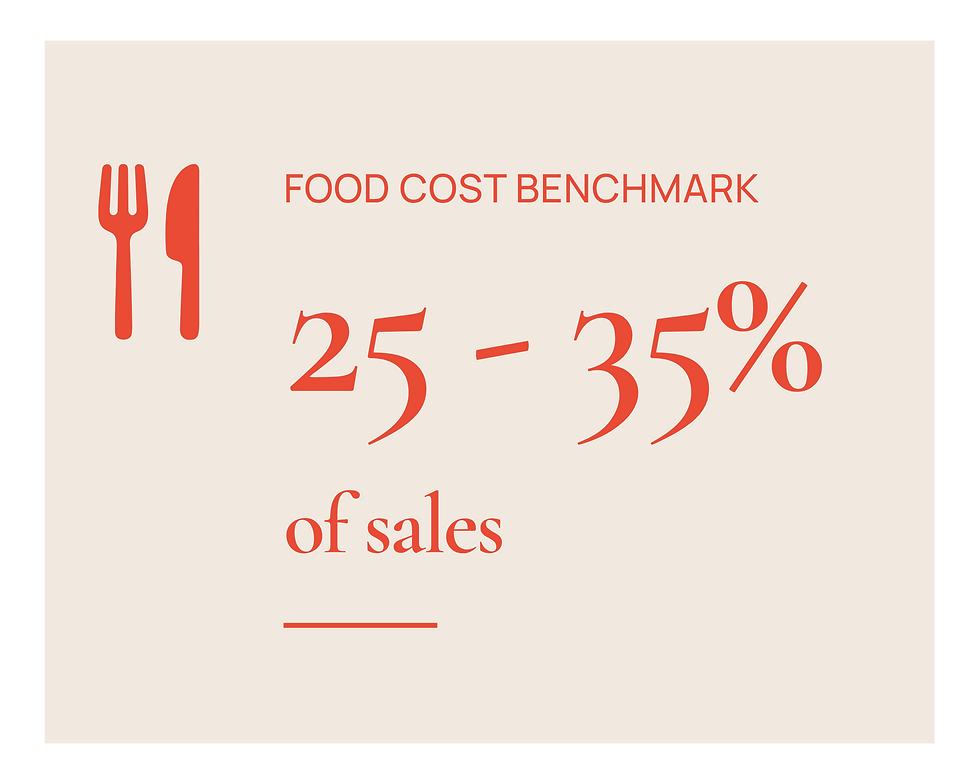
Food cost is one of the biggest expenses in a restaurant, and it's also one of the areas where I see owners lose control surprisingly quickly. As a general guideline, food cost will often fall somewhere around 25% to 35% of sales, depending on the type of restaurant and concept.
But knowing your overall food cost percentage is only the beginning. Ideally, you should also understand the cost of individual dishes. That means knowing what it actually costs to make every menu item—not what you think it costs, and not what it cost six months ago when you first created it.
Ingredient costs change constantly, and in the current environment, you really have to watch them closely. One of the biggest problems I see is a disconnect between the person creating the menu and the person responsible for the finances. A chef may create a dish that tastes amazing, but if the ingredient cost is too high relative to the selling price, it can quietly hurt profitability every time you sell it.

When I owned my ice cream shop, we priced out every new flavor we developed. There were plenty of flavors we loved that never made it onto the menu because they simply didn't meet our margin requirements. They may have tasted great, but that didn't make them good business decisions.
That's something restaurant owners sometimes have to accept: not every delicious idea belongs on the menu.
Labor Can Quietly Eat Up Your Profit
Labor is another major area to watch. For many restaurants, labor should generally stay around 35% of sales or below, although the right percentage varies by concept and operating model.
The important thing is to understand what your restaurant can support. One lesson I learned from operating my own business was that labor control doesn't necessarily mean cutting staff indiscriminately. It means scheduling intelligently.

Pay attention to your peak periods and the slower times around them. When are you consistently busy? When are employees standing around waiting for something to do? Could a shift start 30 minutes later? Could someone leave earlier once the rush is over?
Small scheduling decisions can add up over an entire month. The goal isn't to run so lean that service suffers. It's to run as lean as you reasonably can without drastically reducing the customer experience.
Saving a few hundred dollars on labor isn't worth it if customers are waiting forever, orders are wrong, and your staff is overwhelmed. But having several employees idling during consistently slow periods isn't sustainable either.
Watch the Costs Hiding in the Background
Some restaurant expenses are obvious. You see food deliveries arriving, you approve payroll, and you write the rent check. Other costs are much easier to overlook because they happen in the background.
Delivery apps are a good example. I've had many restaurant owners complain to me about how much they pay companies like UberEats and DoorDash. Depending on the services and marketing programs being used, those fees can take a significant portion of an order.
The problem is that restaurant owners often focus on the additional sales these platforms generate without looking closely enough at how much of those sales they actually keep. If you're selling a $30 meal but giving away a large percentage of that revenue in delivery and marketing fees, the economics are very different from a $30 dine-in transaction.
Delivery can still make sense, but you need to know the numbers. The same is true for credit card processing fees, software subscriptions, repairs, insurance, and dozens of other operating expenses. None of them may seem huge individually, but together, they can take a significant bite out of profit.
Your Bank Account Is Not Your Financial Statement
One of the most common habits I see among small business owners is running the business by looking at the bank account. If there's money in the account, things feel okay. If the balance gets low, something must be wrong.

For example, imagine you collect sales tax from customers throughout the month. That money appears in your bank account, but it isn't really yours. If you spend it on operating expenses and don't set it aside, you'll eventually reach your quarterly sales tax payment and suddenly wonder where the cash is going to come from.
The business may even be profitable on paper while still experiencing a cash crunch because you didn't anticipate when bills and tax payments would come due. That's a cash flow problem.
Profitability and cash flow are related, but they're not the same thing. You need to understand both.
Your P&L Should Be a Monthly Habit
You don't need to become an accountant to run a successful restaurant, but you do need to understand your basic financial statements. At the very minimum, every restaurant owner should review the P&L once a month.
Look at your sales and whether they're trending up or down. Review food cost and labor and make sure those percentages are staying within a reasonable range. Pay attention to your largest expenses and look for anything that has suddenly increased.
It's also helpful to compare one month to another and, when possible, compare the current period to the same period last year. Trends are often more useful than looking at one month in isolation.
When I start working with a new client, I often begin with the balance sheet because that's where I can identify whether transactions have been miscoded or whether the books contain old errors that need to be cleaned up. I spend a good amount of time fixing prior mistakes before relying heavily on the financial statements.
Once the books are clean, the P&L becomes much more useful. That's when I can look at monthly and yearly trends and start to understand how the business is actually performing.
Bad bookkeeping doesn't just create problems at tax time. It makes it much harder to make good business decisions throughout the year.
If You're Doing $100,000 a Month and Still Not Making Money…
If an owner told me, “We're doing $100,000 a month in sales, so why aren't we making money?” I'd start with a few questions.
Do you know your food cost? Do you feel like you have too many employees standing around during slower periods? What are your biggest expenses? When was the last month you were actually profitable?
And most importantly: Can I see your P&L?
Somewhere in those numbers is usually the answer. You may discover that food cost has crept up several percentage points, payroll has increased faster than sales, or delivery and merchant fees are taking more than you expected.
Or you may discover that the restaurant is actually profitable, but poor cash flow planning is making you feel constantly strapped for cash. You can't diagnose any of those problems by looking at the bank account alone.
Profitability Starts With Knowing Your Numbers
Running a restaurant is hard enough without guessing. There are hundreds of things competing for an owner's attention every day: staffing issues, customers, vendors, menu development, repairs, marketing, and everything else that comes with operating a small business.
It's understandable that accounting doesn't always make it to the top of the list, but the numbers are what tell you whether all that work is actually paying off.
You don't need to obsess over your financial statements every day. You do need clean books and a regular habit of reviewing them.
Because the only way to work toward better profitability is to first understand where you are now. And for most restaurant owners, that starts with the P&L.
Not sure what your restaurant's
numbers are telling?
Sesame Accounting provides bookkeeping and
accounting support for restaurants and food businesses,
with insight from someone who's been on both sides of the numbers.
Comments